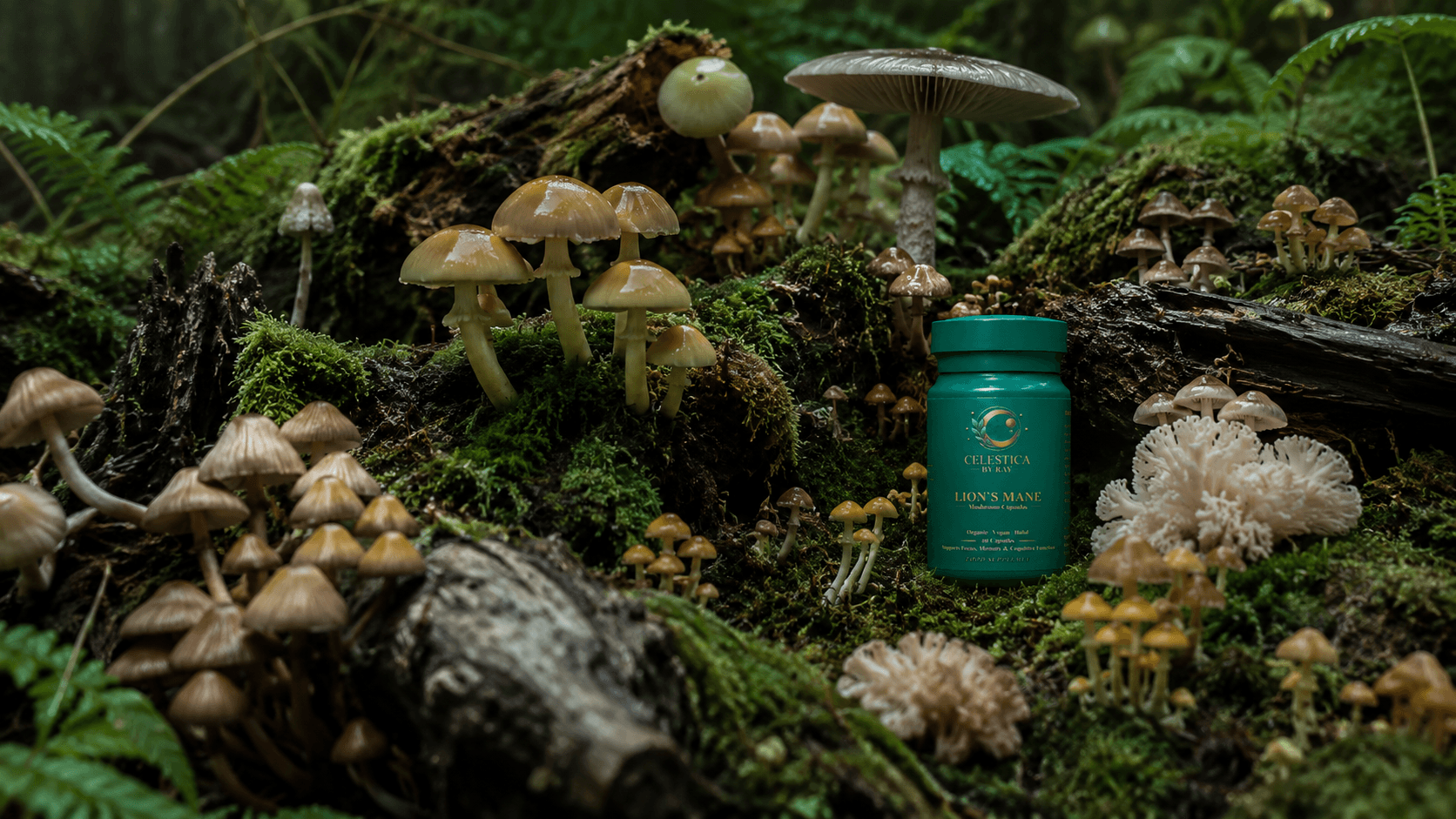
For a long time, we thought of the natural world in simple categories. Plants. Animals. Minerals.
But hidden between them was another kingdom. Quiet, strange and mostly unseen.
The kingdom of fungi. And mushrooms are only the part we notice. The fruiting body. The visible moment. The little sign that something much larger is living underneath the surface.
Below the soil, inside trees, across forest floors and even within the roots of plants, fungi grow through fine thread like structures called mycelium. This hidden network can spread quietly through its environment, breaking things down, recycling nutrients and helping ecosystems continue. In a way, mushrooms are not really the whole organism. They are more like the flower of the fungi world.
And maybe that is what makes them so fascinating.
Fungi are not plants. They do not use sunlight in the same way plants do. They do not grow from seeds. Their cell walls are made with chitin, a material also found in the shells of insects and crustaceans. They reproduce through microscopic spores, carried by air, water, animals and the environment around them. They are their own world entirely, the forgotten kingdom.
Ancient, strange and essential
Fungi have been part of life on Earth for an incredibly long time. Long before functional mushrooms became capsules, powders, teas or wellness rituals, fungi were already working in the background of the planet. They help decompose what is old, return nutrients to the soil, form relationships with plants, support forests from beneath the ground.
Without fungi, the natural world would look very different. Fallen trees, leaves and organic matter would not break down in the same way. Forests would not recycle life back into the earth as efficiently. Plants would lose some of their quiet underground partners.
This is one of the most beautiful things about fungi. They are not loud organisms. They do not need attention to be important. They work in the background.
Mushrooms in the old world
Long before modern research, people were already noticing mushrooms.
They appeared in folklore, food, medicine, rituals and traditional practices across many cultures. Some were feared. Some were respected. Some were used carefully. Some became symbols of mystery, transformation and the deep intelligence of nature.
That makes sense.
Mushrooms appear suddenly after rain. They grow from darkness. They disappear quickly. Some nourish. Some poison. Some have unusual shapes and colours. Some grow on trees like old wooden shelves. Some look almost unreal. It is easy to understand why humans looked at mushrooms and felt that they belonged to another world.
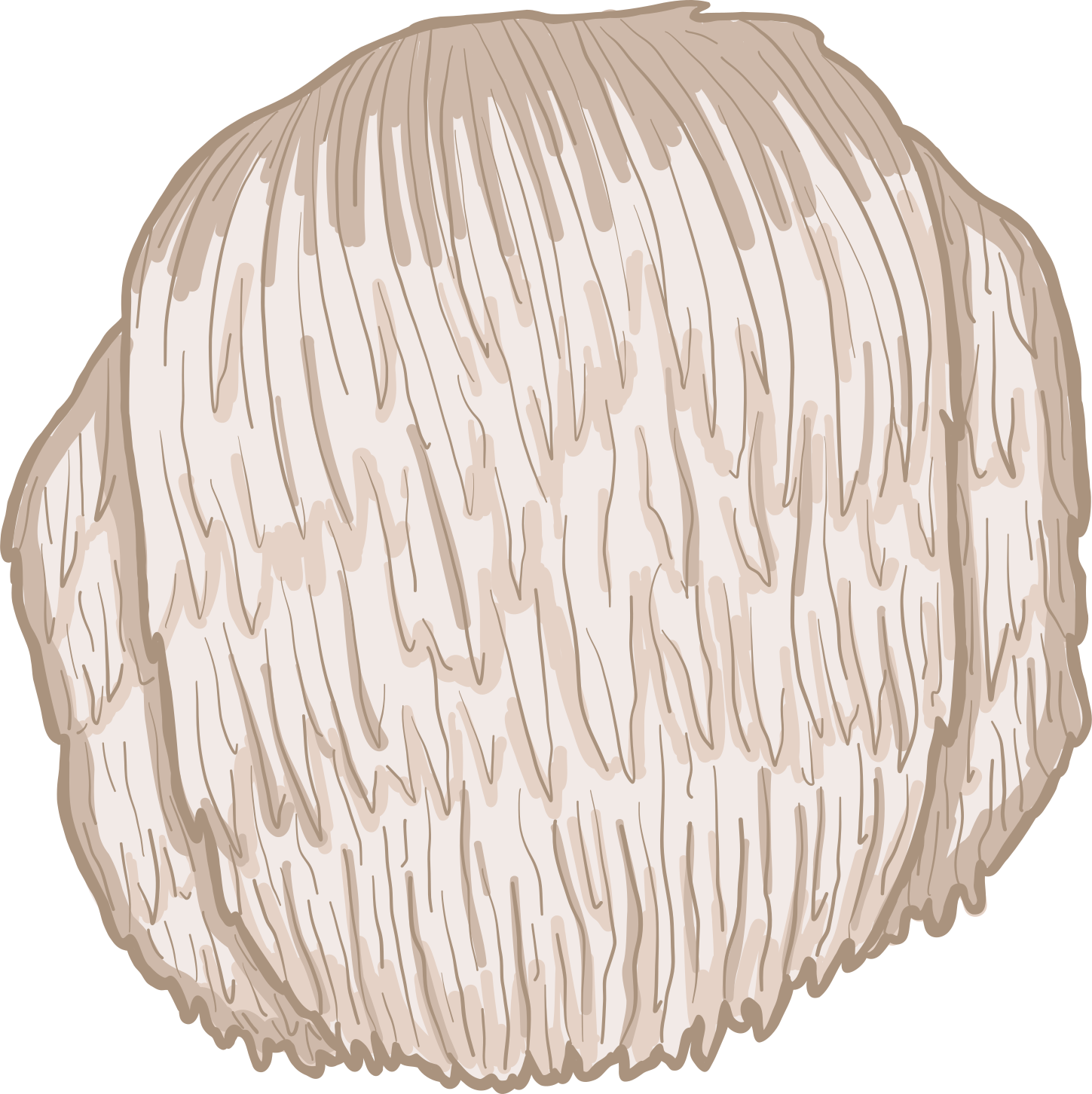
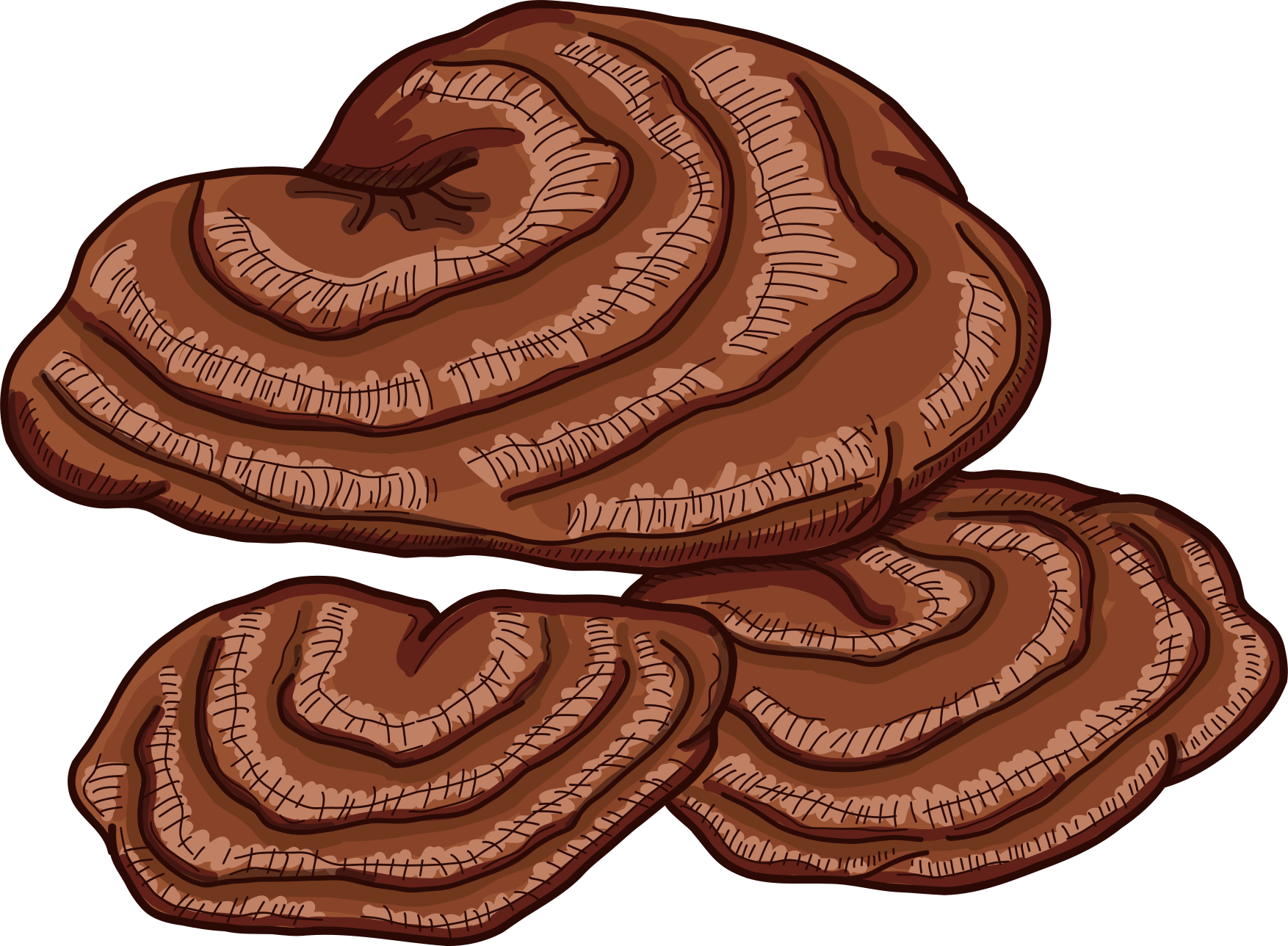
In traditional wellness systems, certain mushrooms became especially valued. Reishi was often associated with calm, longevity and spiritual balance. Lion’s Mane was admired for its unusual appearance and later became known for its connection to focus and cognitive support. Chaga, Cordyceps, Maitake, Shiitake and Turkey Tail all developed their own reputations in different parts of the world. Today, we are not just repeating old stories. We are beginning to look at these mushrooms through a more modern scientific lens.
Mushrooms in the modern world
Now mushrooms have entered a very different environment. Not only forests, apothecaries and old traditions but morning routines, desk drawers, coffee cups, gym bags or evening rituals.
Modern life is full of pressure. We want focus without feeling wired. Energy without constant stimulation. Rest without switching everything off. Balance without making wellness feel like another full time job. That is where functional mushrooms have found their place.
They are not a quick fix. They are not a dramatic promise. They are better understood as daily support. Something small, consistent and natural that can become part of a wider routine.
Lion’s Mane is often chosen by people looking to support focus, clarity and mental performance.
Reishi is often associated with calm evening rituals and balance.
Cordyceps is often linked with energy and vitality.
Chaga and Turkey Tail are often valued for their antioxidant content and immune focused compounds.
Maitake and Shiitake bring their own nutritional and traditional importance.
Each mushroom has its own character. Its own history. Its own reason for being studied.
Together, they show that fungi are not a passing trend. They are an ancient kingdom entering the modern world in a new form.
The kingdom we forgot is returning
Mushrooms were never new, we just stopped paying attention. Now, as more people look for natural ways to support energy, focus, calm and resilience, fungi are being rediscovered. Not as magic. Not as a miracle. But as one of nature’s most fascinating and complex kingdoms.
Ancient, intelligent and deeply connected to the world around us. The forgotten kingdom is not really forgotten anymore. It is finding its way back into our rituals, our research and our everyday lives. One capsule, gummy, one cup and one routine at a time.