

Every year, scientists uncover new discoveries that remind us just how little we truly know about the fungal kingdom. While mushrooms have been part of human history for thousands of years, modern research is revealing that they may play a much bigger role in our future than we ever imagined.
1. Scientists create the first global map of Earth’s underground fungal network
This may be one of the most important fungal discoveries in recent years.
An international team of researchers has produced the first ever global map of mycorrhizal fungal networks, revealing a hidden underground web stretching an estimated 110 quadrillion kilometres beneath Earth’s surface. These microscopic fungal threads connect with the roots of around 70% of all land plants, forming a living network that transports water and nutrients while receiving carbon from plants in return.
Researchers estimate these fungal networks help move around 4 billion tonnes of carbon dioxide into soils every year, roughly equivalent to 11% of annual human caused carbon emissions. They also found that healthy grasslands contain some of the world’s densest fungal networks, highlighting how important these hidden ecosystems are for biodiversity and climate regulation.
It is remarkable to think that one teaspoon of healthy soil may contain up to 10 metres of fungal threads, all working silently beneath our feet every single day.
2. Scientists discover new glowing mushrooms in Mexico
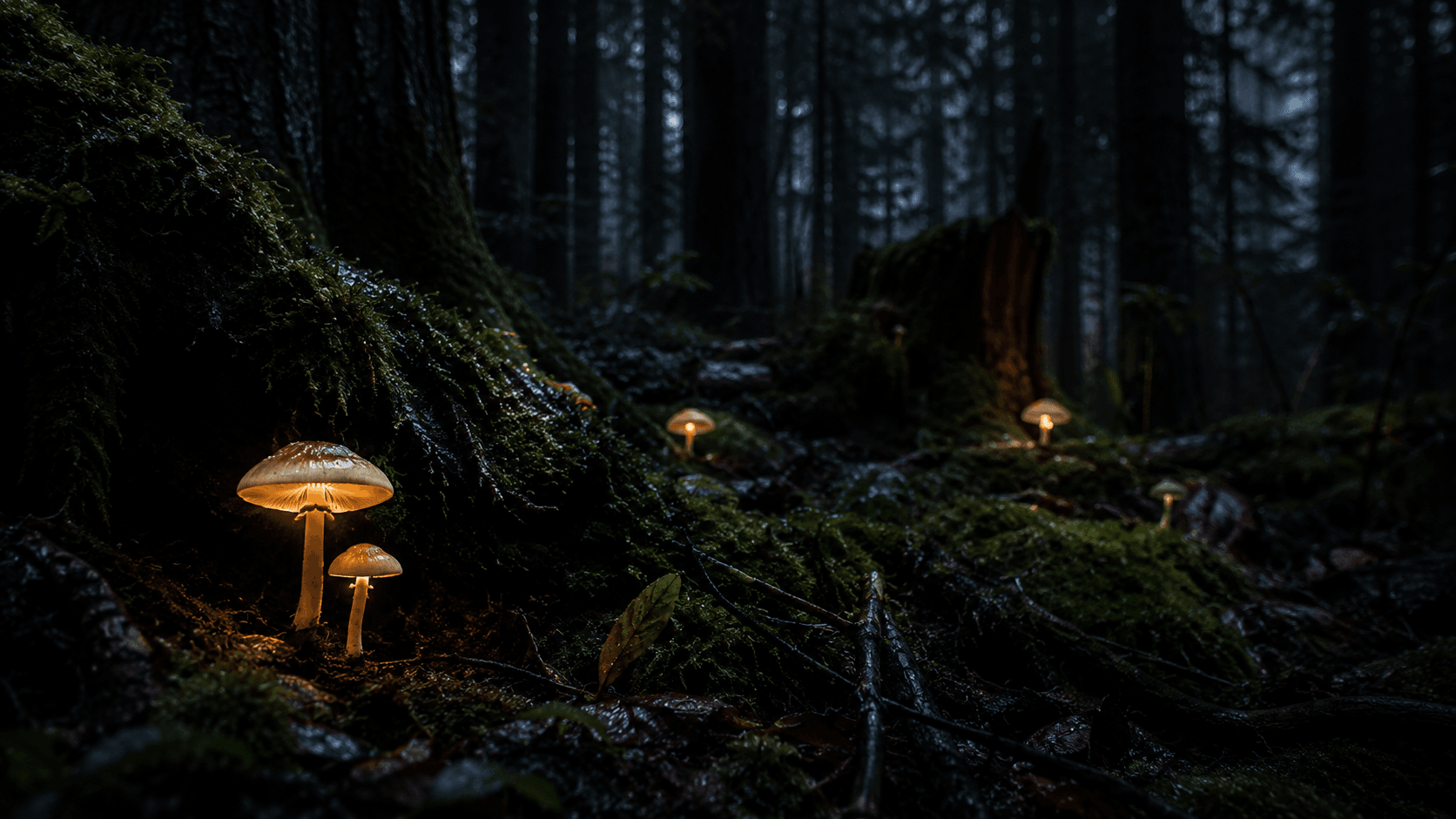
Researchers exploring Mexico’s cloud forests recently identified several previously unknown species of naturally bioluminescent mushrooms.
These fungi produce their own soft green glow through a chemical reaction, creating one of nature’s most extraordinary displays. Scientists believe the light may attract insects that help spread fungal spores, although the exact evolutionary purpose is still being investigated.
Only around 80 species of glowing mushrooms are known worldwide, making every new discovery valuable for understanding how fungi evolved and adapted over millions of years.
3. Mushrooms could help replace plastic
Fungi may also become part of the solution to one of the world’s biggest environmental challenges.
Scientists are developing packaging materials made from mycelium, the underground root like structure of fungi. Instead of relying on fossil fuel based plastics, mycelium packaging is grown using agricultural waste and naturally biodegrades at the end of its life.
Researchers believe this technology could reduce plastic pollution while creating strong, lightweight and fully compostable alternatives for packaging, insulation and even construction materials. What was once considered simply a mushroom is now inspiring an entirely new generation of sustainable products.
Why this matters
At Celestica by Ray, we often talk about functional mushrooms because of their long history in traditional wellness. But modern science is showing us that fungi are far more than a source of nutrition.
They support forests, help regulate our climate, inspire sustainable technologies and continue to reveal entirely new discoveries every year. Considering scientists estimate that millions of fungal species may still be unknown, we are only beginning to understand the remarkable kingdom beneath our feet.
The next breakthrough could already be growing underground
https://www.sciencedaily.com/releases/2026/06/260614011845.htm?utm_source