


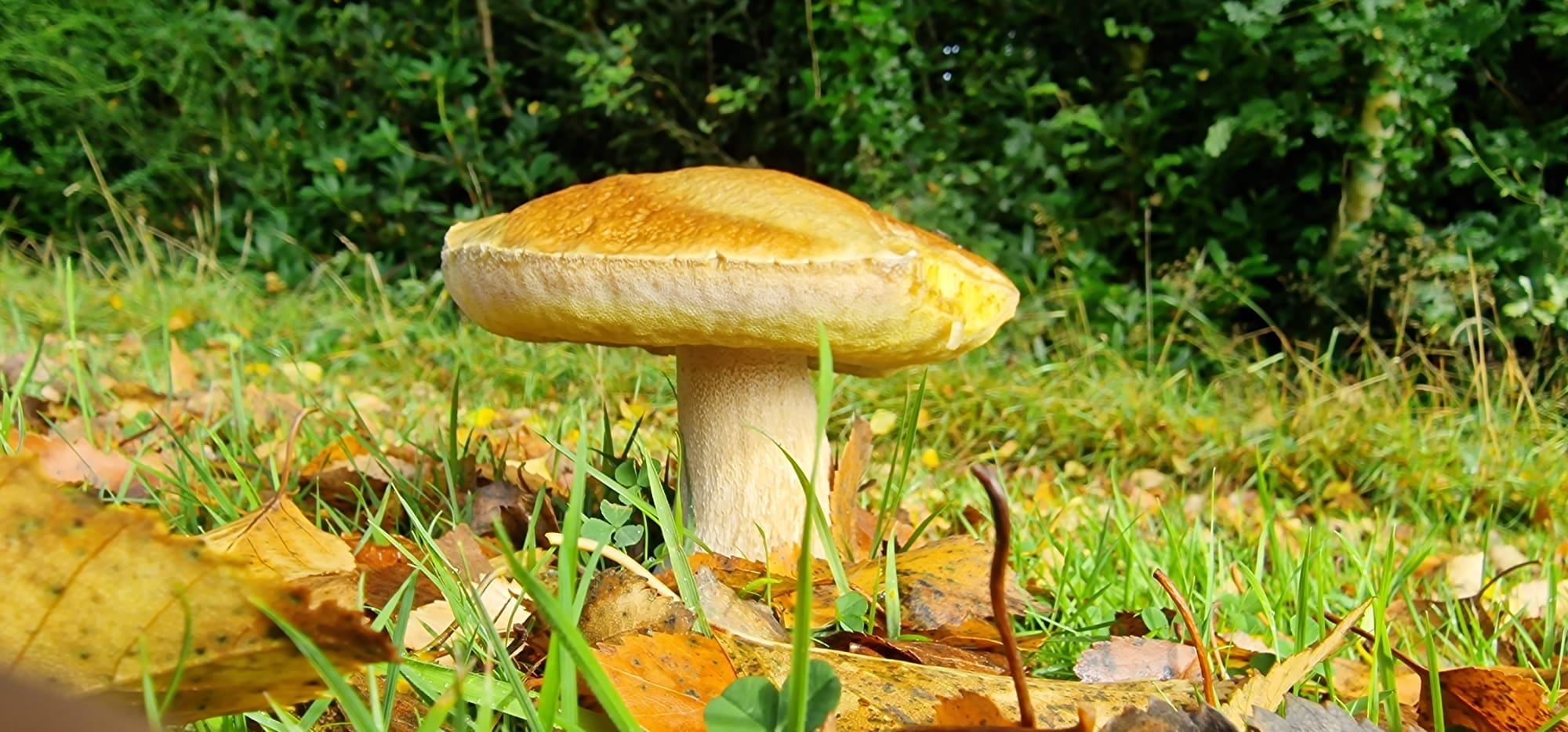
Autumn mushrooms, a little curiosity and the science behind spending time in nature
As I am now spending time at my best friend house away from the city, in a small town of the south of Scotland, foraging mushrooms has became my temporary therapy.
At Celestica by Ray, fascination with mushrooms reaches beyond the bottle. It takes us back to the places they grow and to a question that feels especially relevant as the days become shorter: what can time in the woods do for our minds?
A little space from repetitive thoughts
Most of us recognise the experience of going over the same worry again and again. Researchers call this rumination.
In a small study published in PNAS in 2015, healthy participants took a 90 minute walk in either a natural setting or an urban environment. Those who walked in nature reported less rumination afterwards. Researchers also observed reduced activity in a brain region associated with this pattern of thinking. The urban walking group did not show the same changes. This does not establish woodland walks as a treatment for depression. It does offer an interesting clue about how our surroundings might influence the thoughts we carry with us.
Sometimes a change of scenery may give us a little space to experience things differently.
How much time in nature?
A large English study published in Scientific Reports in 2019 examined responses from nearly 20,000 people. Those who reported spending at least two hours in nature during the previous week were more likely to report good health and high wellbeing than those who reported no nature visits. That time could be spread across several outings or spent in one longer visit. The study was observational. It found an association rather than proving that time outdoors caused better wellbeing. Two hours should therefore not be treated as a prescription or a threshold we must reach before a walk becomes worthwhile.
Mushrooms give us a reason to pause
Looking for mushrooms changes the pace of a walk. Once we begin noticing them, the woodland floor becomes full of questions. Why are some growing on fallen branches? Why does one patch hold a whole cluster while another seems empty? How many have we already walked past? We do not need to know every name to enjoy that curiosity. There is pleasure in noticing a shape or colour for the first time and returning a few days later to see what has changed. The research above explored time in nature rather than mushroom foraging specifically. Still, looking for fungi offers a lovely way to turn an ordinary walk into a closer encounter with the season. A photograph and a little observation can be enough. If you plan to collect mushrooms for food, seek reliable identification from an experienced expert. A photograph or an identification app alone cannot establish that a mushroom is safe to eat.

